

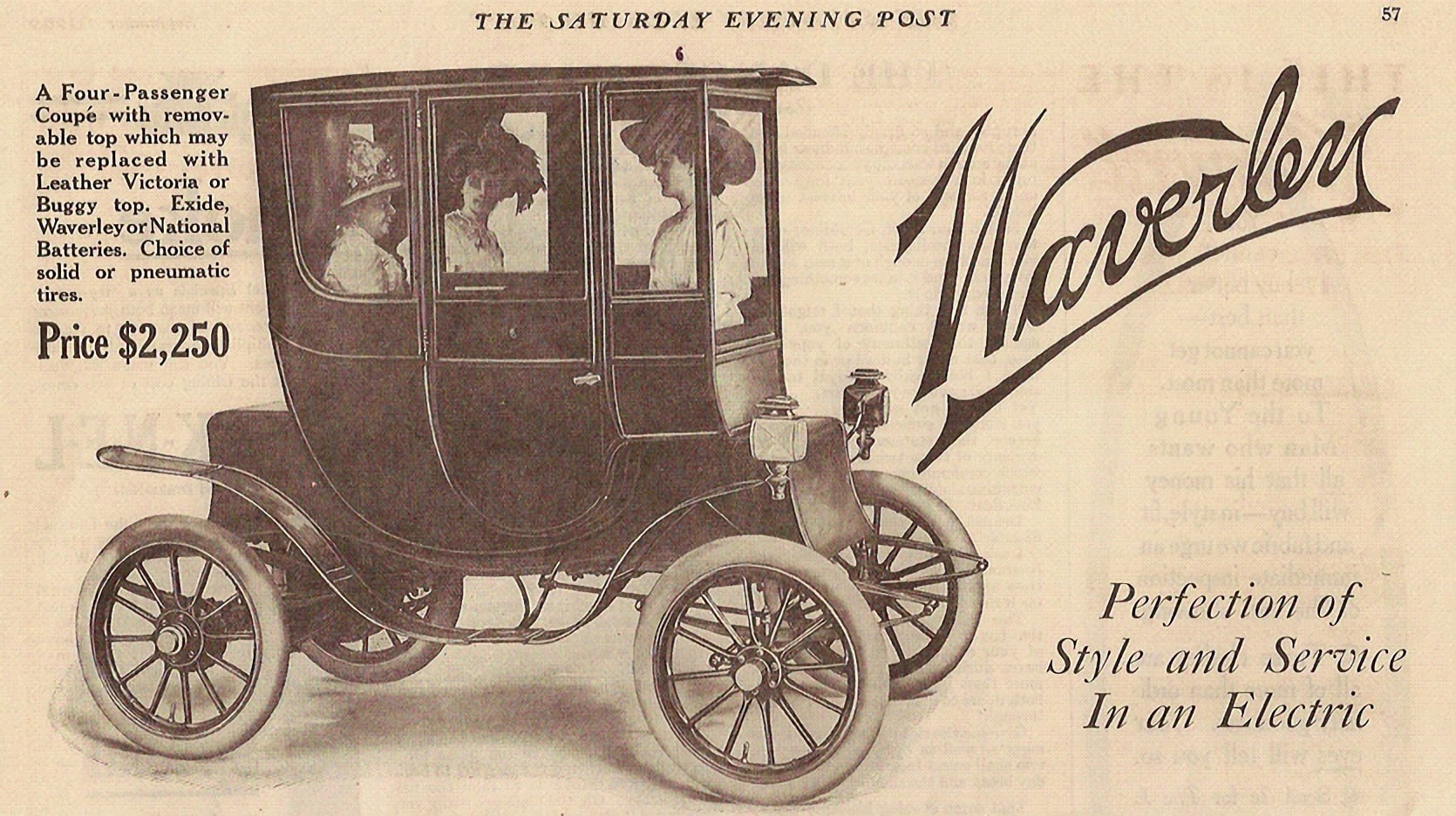
If electric cars are the future, why do they not see the full light of day despite a proven hundred-year history? This is a question any average samaritan would ask. It’s perhaps a question too obvious to ask aloud. However, the answer isn’t that obvious. A careful study of the history of electric vehicles illustrates a shocking truth — a truth very few will believe. Yet, as the wise say, truth is often stranger than fiction.
The hushed but celebrated history of electric vehicles began almost a hundred years ago (yes, they’re older than most of us!). Although it’s excruciatingly difficult to attribute the birth of the electric vehicle to a single inventor or manufacturer, it was perhaps the evolution of human consciousness that was its true mother. If one were to peek into history, one would realise that the birth of electric vehicles was possible because of a series of breakthroughs that quietly and surreptitiously shaped the future of mankind.
In the wee years of the century, a few innovators from Hungary, the United States and the Netherlands began for the first time to envision the idea of a vehicle operated by batteries. Even though the idea seemed ludicrous at the time, it was during this period that the first small-scale prototypes of electric cars were made. In another part of the world, a British inventor named Robert Anderson built the world’s first electric carriage. But it wasn’t until the second half of the 19th century that battery-operated electric vehicles became a practical reality.
A second breakthrough was made by William Morrison in the United States when he created the first actual six-passenger electric vehicle capable of travelling at a speed of 14 miles an hour. This invention sparked interest in electric cars for the first time in history. Over the next decade or two, several automakers explored the power of electricity on four wheels. Back in the day, the fashionable New York City even had a fleet of electric taxis. But why did the fad fade away?
In the beginning of the twentieth century, horse carts were still the preferred mode of transport. But as America became wealthy in its gilded age, newly invented motor vehicles that ran on gasoline became more popular. These cars weren’t just popular but powerful. It roared on the roads, covered long distances fast, and created an image of machismo that exists even today. In contrast, electric vehicles were quiet and preferred by women for short trips.
However, the biggest blow to electric vehicles was dealt by Ford’s mass-produced Model T car launched in 1908 that took the personal vehicle market by storm. The Model T wasn’t just widely available, it was also far more affordable than electric cars. They cost roughly a third lesser. Why would an average American buy a car that ran slower but cost more? It was a national no-brainer.
Other events in history also contributed to the fall of the electric vehicle. After the discovery of Texas crude oil, gas became cheap and readily available for every American who wished to hit the road. Gas stations mushroomed across the country. In comparison, very few Americans outside cities had electricity at that time. Therefore, owning an electric vehicle was out of the question. It was a luxury only a few were privy to. By 1935, electric vehicles began to disappear altogether — like an endangered species scrambling for survival. Over the next 30 years, electric vehicles entered their darkest era in which hardly any advancement in technology happened. In sharp contrast, inexpensive gasoline continued to inspire improvements in the internal combustion engine further dampening the revival of electric vehicles.
It wasn’t until the 1970s that growing oil prices (owing to events such as the 1973 Arab Oil Embargo) and pollution concerns would bring back the spotlight on electric vehicles for a second time. The carbon had finally accepted defeat in the face of alternative fuels. Humans had understood the perils of fossil fuels and now looked for greener solutions. The roaring decades that had gone by had caused enough planetary damage for federal regulators to sit up in their chairs.
Environmental agencies stirred up the broth even more. A new destiny was set in motion for electric vehicles, and with it a new destiny for our planet.
No Comments